
Calling all Psychoecologists
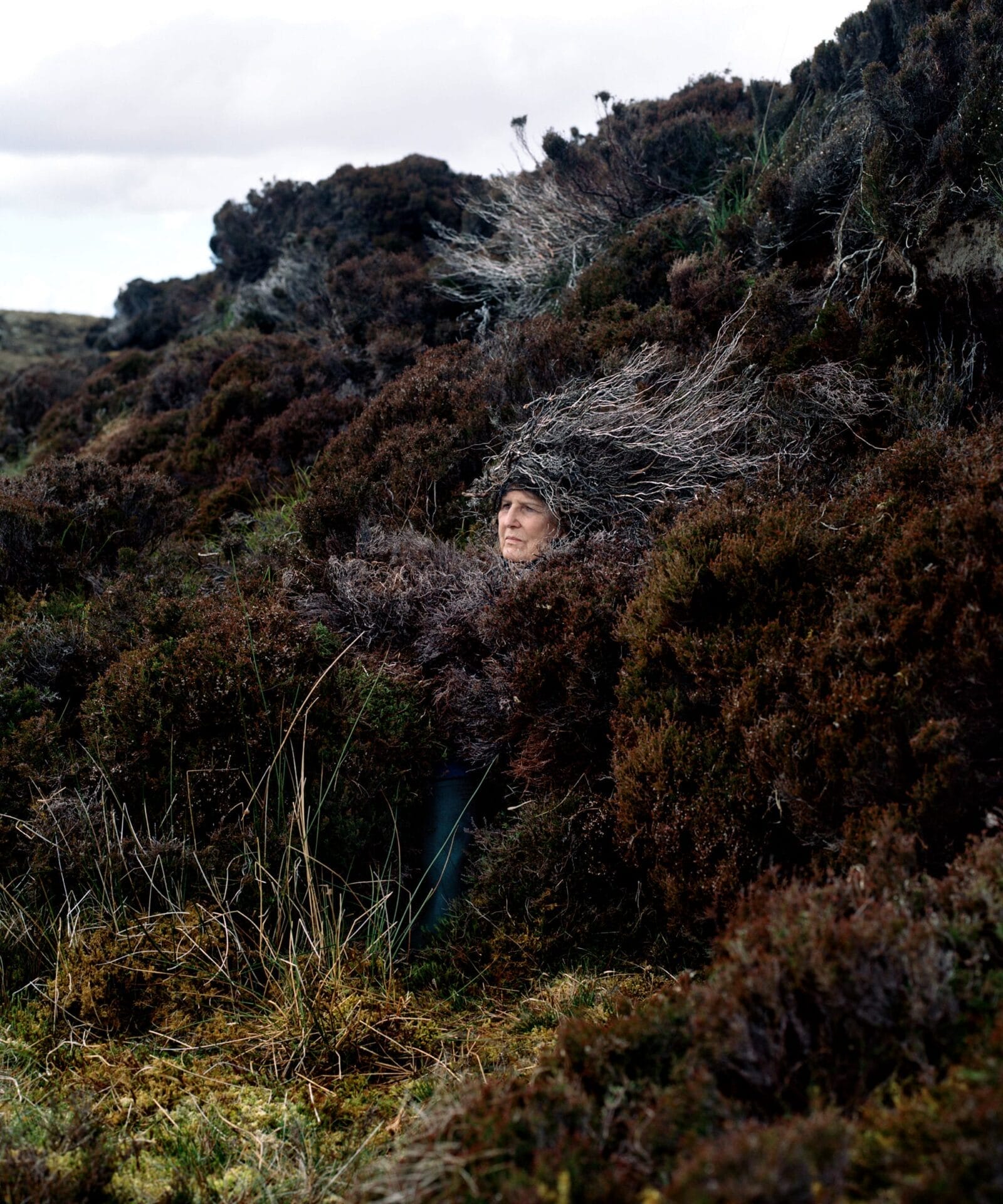
What if the mind is not separate from the living world, but part of it? These are some notes toward a practice of psychoecology.

mind x city : psychogeography
It’s hard to say when walking went from something I did a lot, charging about suburban south Essex by foot as a child and teenager, to something that feels like an integral part of who I am. Today I recognise walking as a primary way in which I am able to connect with the world, other people and myself. A body moving through the world at 4mph (and increasingly slower) with inner and outer worlds somehow lined up, in rhythm.
Along the way I fell in love with the concept of psychogeography, the methods, literature and characters. How places and urban environments shape our emotions, behaviours, and thoughts. It is about mind x city.
The starting point for psychogeography is 1950s Paris, where the Situationists, a group of left-wing artists, were calling for radical change in reaction to the increasing privatisation and inaccessibility of the city within a destructive capitalist system. Guy Debord, the collective’s co-founder, used the term psychogeography to describe the study of how the urban environment influences our moods and behaviours, and vice versa. In response the Situationists developed experimental strategies to unlock the city. One of their core practices was the dérive or ‘drift’: unplanned, often drunken walks around the city, getting lost, straying off the prescribed path, exploring free from the confines of predictability and routine.
But the city was still a human stage. And the walkers were mostly men. The dérive was a practice of radical attention, but its gaze stayed fixed on streets, buildings, flows of people, the world as shaped by and for humans. Nature, from my understanding, when it appeared at all was backdrop. The living world beyond the human was essentially absent.
Living in London in my 20s, pretty much trying to look like a Situationist but with fewer cigarettes, psychogeographical walking helped me weave myself into the city. Long dérives alone and with close friends, through day and night: stalking lost rivers, tracing the edges of ghost forests, pilgrimages to ancestral neighbourhoods, derelict abbeys and post-war estates. Walking through the city was a way to explore mind and place as if reading a book.
Following the course of the Fleet, one of London’s lost or buried rivers, culverted beneath Camden, King’s Cross and Clerkenwell, trying to hold in mind both the city overhead and the river running mostly silent (apart from beneath one or two manhole covers) underneath it. There was something about that doubled attention, the present street and the ghosted waterway, that felt close to what psychogeography was reaching for. Two realities occupying the same space. A hidden life flowing beneath the visible one.
The river I was following was buried, yes, but it was still there. Still moving. Still, in some sense, alive. And psychogeography had no language for that. No way of asking: what is the river’s experience of this? What has been done to it, and what might it need?
As Rebecca Solnit writes in A Field Guide to Getting Lost (2005), places become enmeshed with our identity, the scenes of love, of crime, of happiness, of fatal decisions. The places are what remain. They become the tangible landscape of memory, the places that made you and in some way you too become them.
But what if the places are not just containers for human memory? What if they have their own interior life, their own needs, their own forms of attention? Psychogeography brought me close to that question. It didn’t quite ask it.
Which left me wondering: what might a practice look like that starts not with the city as a stage for human experience, but with the living web of relationships we are already part of?
Mind x living world : psychoecology
Where psychogeography centres streets, buildings, and city flows, what if psychoecology centres relationships between beings, systems, and places? Not just how the environment shapes inner life, but inner life as continuous with the living systems we are part of. Shaping and being shaped.
What shifts if we start here? What becomes visible in our inner life when we treat it as continuous with forests, rivers, soils, insects?
I want to explore this through four lenses, a loose cluster of thoughts rather than a fixed theory. Four different ways into the idea, each asking different kinds of questions.
1. Ecology inside the psyche
Forests, rivers, weather, birds, soil, fungi, these don’t just exist outside us. They live inside us too, as presences in memory and metaphor. Our nervous systems are tuned by the places and beings we grow up among. The emotional atmosphere of a moor or a coastline, a retail park or an industrial estate, these become templates for safety, danger, possibility.
I grew up in a landscape of edges. South Essex in the 80s and 90s: not quite suburb, not quite countryside, but the seam between them. And it was in the edges that I learned to move. Alleyways threading estates together. The thin strips of rough ground between housing and field. The back routes that kept you hidden, or free, or both. The scrubby margins where both buddleia and bramble pushed through chain-link and foxes crossed between worlds.
There was something about those in-between places that felt more alive to me than either the tidy suburb or the open field. They were unmanaged, ambiguous, slightly outside the rules. You could be no-one in particular there. The edges of fields where we gathered. The edges of friendships, never quite fully belonging. The edges of family life too, where home sometimes felt like something to orbit rather than inhabit and being outside was a form of relief.
I didn’t have the language for it then. But I think I was learning a particular kind of attention. An attunement to thresholds. To what lives in the between. I don’t think that edge-sense has ever left me. It was, I think, an ecological education. The edges of ecosystems are called ecotones: zones where different habitats meet and species from both are present, along with species found nowhere else. I sense I grew up in one and have been seeking these spaces since.
Extinction, enclosure, pollution are psychic events as well as ecological ones. The emotional climate of a monoculture landscape is different from a thriving one.
What kind of self grows in a life lived mostly indoors, mediated by screens, with little contact with other species?
What shifts, in sense of self, in felt safety, in imagination, after sustained time in a dense, diverse ecosystem?
2. Psyche as ecosystem
Flipping the direction. Not only does ecology shape the psyche, but the psyche itself is a kind of ecosystem.
Inner voices, moods and habits as different species or niches. Invasive thoughts and keystone experiences, the nutrient flows of attention. Media, work patterns and devices as potential pollutants or fertilisers. Therapy, rest and connection as forms of ecosystem restoration.
I’ve been thinking about this a lot in recent years. Becoming a father. A husband. Taking on leadership at work. Each new role brought new demands and the expectations, mine as much as anyone else’s, largely stayed fixed. The same outputs were required from a system that was quietly becoming something different.
An ecosystem under pressure doesn’t fail all at once. It adapts. It finds workarounds. It puts energy into maintaining the appearance of health while quietly redistributing resources, letting some things go without announcement. I recognise that pattern in myself across those years. Certain things went untended, curiosity, slowness, time alone, unstructured thought, not because I chose to neglect them but because the system re-routed everything toward what felt most urgent. The work, the roles, the expectations.
Ecologists talk about a concept called the shifting baseline. Each generation accepts the depleted state they inherit as the norm, not recognising what has been lost because they never knew it. I wonder sometimes how much of what I accepted as my ordinary inner weather, the slight flatness, the ambient tiredness, the sense of something just out of reach, was a shifted baseline. Not who I was, but what I had adapted to until I couldn’t hold it any more.
Which parts of our inner ecosystem are over-grazed, over-lit, over-cultivated?
Which have gone feral, or fallen into neglect?
Which relationships, places, or practices increase the wildness of my inner life?
3. More-than-human psychology
Move beyond human interiority altogether. During the first Covid lockdown I walked a loop almost every day in the park west of our house. The streets were quieter than I had ever known them. And something shifted in who else was there.
A fox family started walking alongside me. Not fleeing, not freezing, just moving at ease. I don’t think they had changed. I think we had for a moment become less dangerous. The cars gone, the noise down, the humans slower and somehow gentler in their movements. They were making a calculation about me, and for once the calculation came out differently.
Across the country that spring, deer were walking into villages. Into quieted streets and empty car parks, moving through spaces that had been ours and were partially returned to something wilder. It felt less like nature reclaiming anything and more like a reminder. This is what we share. This is what we displace, every ordinary day, without noticing.
The London plane trees along the park edge became what I can only call familiar strangers. I must have walked past them hundreds of times without really seeing them. But with nowhere to be, I started to notice. The particular way each one held its branches. The patterned bark peeling back. The way the light moved through them differently at different times of day.
They hadn’t changed. I had. Or rather, the conditions had changed enough that I could finally meet them. They had been there all along, offering something I hadn’t been still enough to receive.
What might it mean to take these experiences seriously, not as pleasant anomalies but as the ordinary texture of a world full of other beings, each with their own rhythms, needs, and forms of attention?
How might I appear from the perspective of a fox, a river, a street tree?
What would count as psychological harm or safety for these beings?
What changes, in our politics, our ethics, our daily choices, if we treat those experiences as real, even if partly unknowable?
4. Collective psychoecology
Scale out to cultures and systems. The stories we tell about nature, as resource, backdrop, scenery, enemy, kin, are not just narratives. They are mood states. They shape what we are capable of feeling and doing.
Climate anxiety, ecological grief, denial, these are not just individual diagnoses. They are the emotional weather of a culture that has been training itself to feel entitled or ashamed in relation to the living world.
A few years ago I found myself in a field at dusk, part of a group gathered to listen to nightingales sing with Sam Lee, musician, folk singer, conservationist, someone who has spent years building relationships with birds and the people who might learn to pay attention to them. We stood at the edge of a wood as the light faded. And then the bird began, and Sam began, and something happened that I don’t have clean language for.
It wasn’t performance. It wasn’t nature appreciation in the usual sense. It was closer to what I’d call a practice of collective attention, a temporary village of people learning, together, to listen differently. The nightingale didn’t stop being a nightingale. Sam didn’t stop being a musician. But the boundary between audience and world, between human culture and the rest of life, became briefly porous.
That evening and other experiences like it feel like prototypes. Not of something new, exactly, humans have been doing things like this for as long as there have been humans, but of something that needs recovering. Shared rituals, practices, temporary gatherings that help a culture feel itself back into relationship. Camps on the land. Group work in forests. The practicing of parts of a future we want to bring into being.
What new shared practices might help a culture feel its way back?
How do these experiences become not retreats from everyday life but a way of returning to be part of all life everyday?
What would it mean to treat restoration projects, land use decisions, even urban design, as also working with collective psyche?
Psychoecology as practice
This matters most as practice, not theory.
If psychogeographers walk the city differently, then psychoecologists might develop practices of attention that tune into patterns of relationship: who is feeding whom, who is sheltering whom, who is excluded, who is carrying the weight of others’ lives.
They might work with walks, councils, and rituals that invite people to listen to other species and systems, and then act differently because of what they hear.
They might treat restoration projects, land use decisions, and design work as also working with collective psyche.
All of it asking the same question: what happens to the human mind when it remembers that it is one expression of a much wider, living ecology? And what happens to ecosystems when we take that seriously?
I went down a rabbit hole recently on this topic, and actually looked into getting an ecopsychology certificate from a graduate institution. In case you happen to be interested, here are a few resources I jotted down from the course content! The three teachers are Andy Fisher, Jeanine Canty and Mary-Jayne Rust, the authors of the first three books:
- Radical Ecopsychology: Psychology in the Service of Life — Andy Fisher
- Returning the Self to Nature: Undoing Our Collective Narcissism and Healing Our Planet — Jeanine M. Canty
- Towards an Ecopsychotherapy — Mary-Jayne Rust
- Ecopsychology: Restoring the Earth, Healing the Mind — Gomes, & A.D. Kanner
- Keepers of the Earth in Ecopsychology: Restoring the Earth, Healing the Mind — Armstrong, J.
- Ecotherapy: Healing with Nature in Mind — Linda Buzzell & Craig Chalquist
This resonated strongly, particularly the discussion of thresholds, hidden rivers, and the movement beyond psychogeography's focus on human experience alone.
One thing I've found through practice is that the most interesting shift happens when places stop feeling like settings and start feeling like participants. Not necessarily because we've proved anything about them, but because sustained attention changes the quality of the relationship. In fact, I don't think we need to prove anything about them - places and elements within place have their own agenda regardless of what we believe.
The idea of psychoecology feels useful to me for exactly that reason. It asks what becomes visible when we stop treating mind and place as separate things.